A Fungal Network Is Being Tested as a Cheap Soil Sensor
Mycelium responds to moisture and nutrients with tiny electrical signals. A field trial is asking whether a farmer can read them without a laboratory.
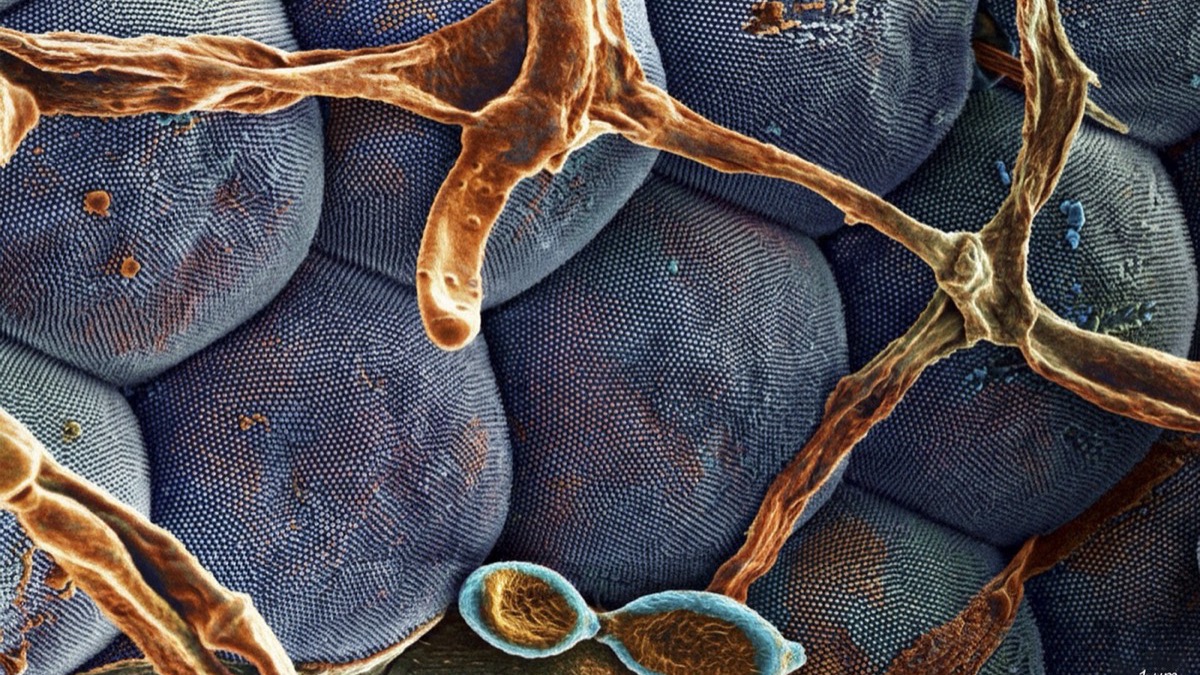
A commercial soil probe costs a few hundred dollars and needs replacing every couple of seasons. A network of fungal filaments costs almost nothing and builds itself. That asymmetry is the reason a small research group has spent four years trying to turn a living mat into an instrument.
The signal is real, if faint. When mycelium moves water and ions through its hyphae, it produces voltage differences in the millivolt range. The question is not whether the signal exists, but whether it carries information specific enough to be useful.
What the trial measures
The setup is deliberately boring: twelve plots, three treatments, electrodes pushed into the topsoil and left alone for a full growing season. Every plot also carries a reference probe, so the fungal signal can be compared against something already trusted.
- Moisture: does the voltage track irrigation events reliably?
- Nutrient pulses: can a fertilizer application be detected within hours?
- Stability: does the signal drift as the colony ages, and how fast?

The drift problem
Living sensors change. A colony that responded cleanly in June may respond differently in September, and the calibration that worked in one plot does not transfer to the next. Every sensor researcher recognises this shape of problem: the physics is fine, the biology is not cooperating.
A living sensor is not a device you install. It is a relationship you maintain.
The team's answer is statistical rather than biological. Instead of calibrating each plot, they model the whole set and look for changes that appear in several plots at once. Slow drift cancels out; a real event does not.
Why it might still matter
Even a coarse signal would be worth having in places where nobody can afford a probe network. A farm that knows a field is drying two days earlier can move irrigation without installing anything expensive.
The trial ends next spring. The researchers are careful to say they do not expect to replace instruments. The realistic outcome is a cheap early-warning layer that tells a farmer where to look, and a probe that confirms it.